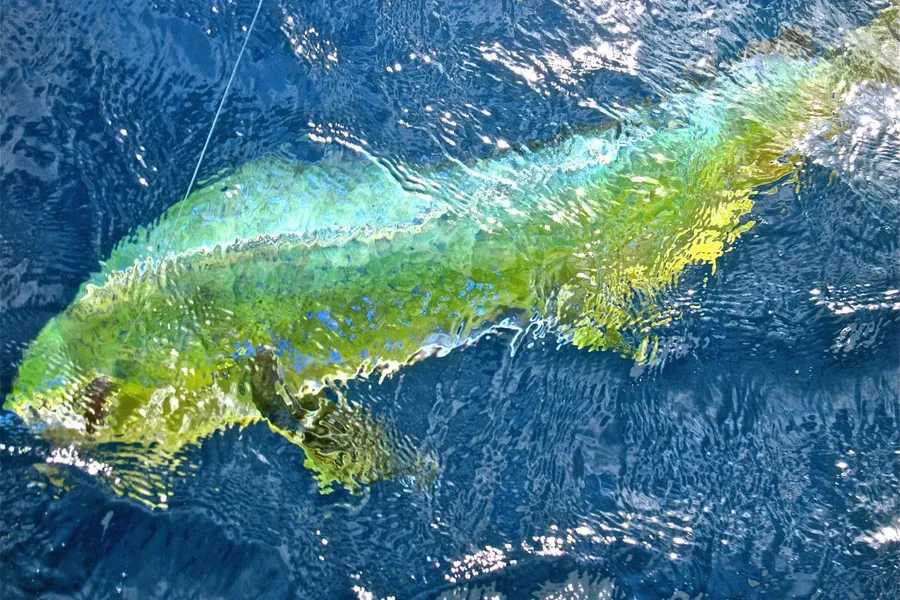
Some of the best fishing in the Caribbean
The deep blue and crystal clear shallows found in the BVI offer some of the best fishing in the Caribbean. At anchor, or while sailing, drop in a line and reel in a trophy sized Blue Marlin, Yellow and Black Fin Tuna, Wahoo, and Dolphin (Mahi Mahi).
At Anchor or inshore fishing in the Sir Francis Drake Channel you can use light tackle, hooking onto Dolphin, Barracuda, Kingfish, and Wahoo.
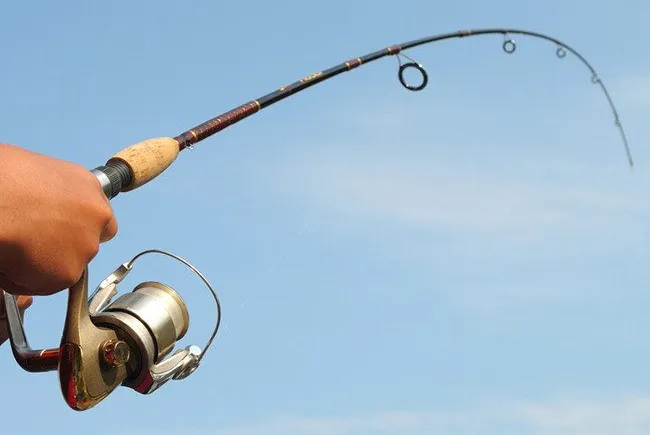
Fishing permit required
Anyone over the age of 18 who is fishing must have a recreational fishing permit which is granted to visiting tourists who wish to catch on a catch & release basis. It is illegal to have bill fish in one’s possession or to have more than 30 pounds in ones possession per boat.
Taking lobster and spearfishing (any method) are prohibited.
BVI SUP CO can arrange the fishing permits for you for $60 per person. It takes at least 4 business days to arrange, so order it on their website (opens in a new tab) ASAP. We can provide you the license number of the boat, which you will need for the permit application.
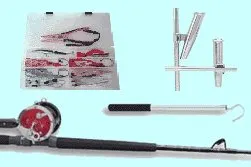
Rent your fishing gear
BVI SUPco can also rent you the Reel, Rod, Tackle Box, Rod Holder, Gaff and lures you will need for your fishing onboard.
Where to fish
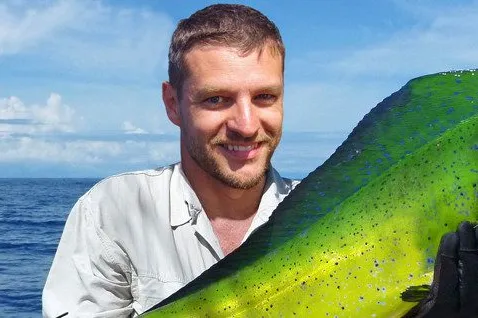
Deep sea fishing
The BVI is home to the famous North Drop above Tortola, which claims the highest number of Blue Marlin strikes per day of anywhere in the World. The North Drop is actually within the waters of the British Virgin Islands, but located about 18 miles above St. Thomas.
Inshore fishing
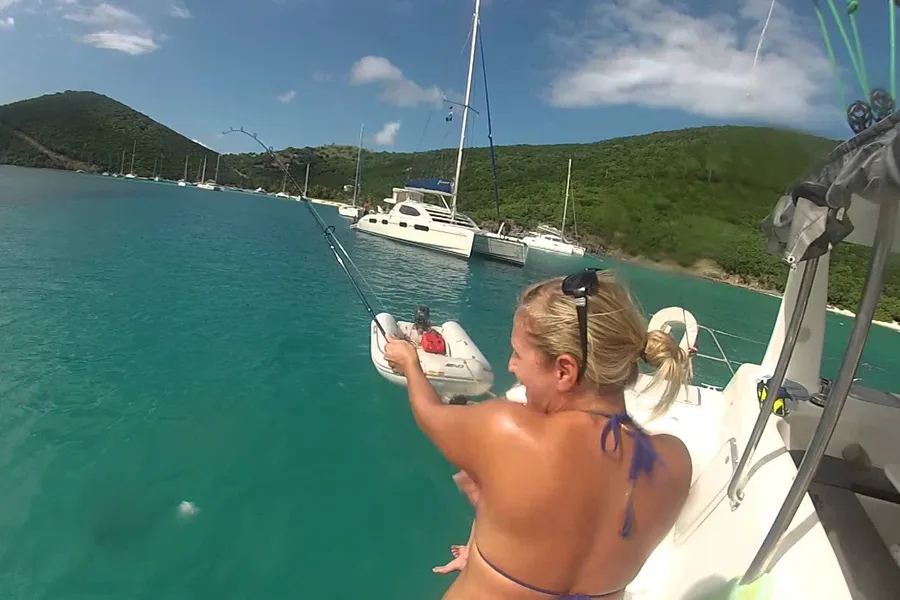
Trolling a line behind your yacht during your sailing trip can prove to be very worthwhile. There are schools of Spanish Mackerel, tuna and Kingfish that hungrily feed around the Islands, which you can catch in the Sir Drakes channel, on the North side of Tortola or while sailing to Anegada.
Bone fishing
There is excellent bone fishing in the BVI particularly on Anegada. Other BVI locations are not as vast as Anegada’s miles of reef.
There is a small but accessible spot west of the Beef Island bridge where you can bone fish.
Fish poisoning caution
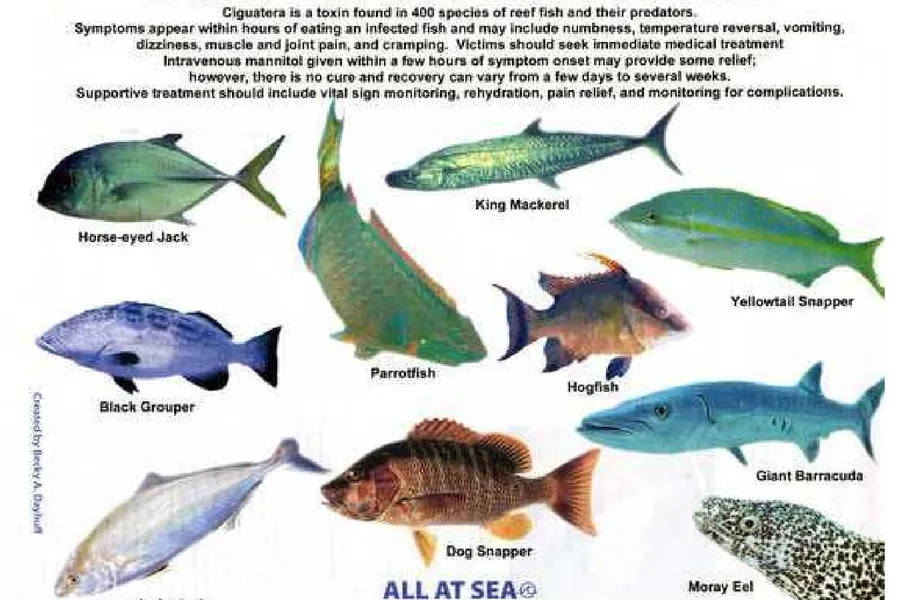
We caution people against eating most species of fish in the BVI. There is a toxin, which can cause ‘fish poisoning’ if ingested. The name is ciguatera (opens in a new tab) and it can cause nausea, pain, cardiac, and neurological symptoms in humans when ingested. In general, to be safe, catch-and-release is advised, although tuna, mahi-mahi, kingfish and Wahoo can be considered safe to eat.
Barracuda may be poisonous and should always be returned.
Fish you may catch — and which to avoid
Red: do not eat · Amber: caution · Teal: release · Green: good to eat
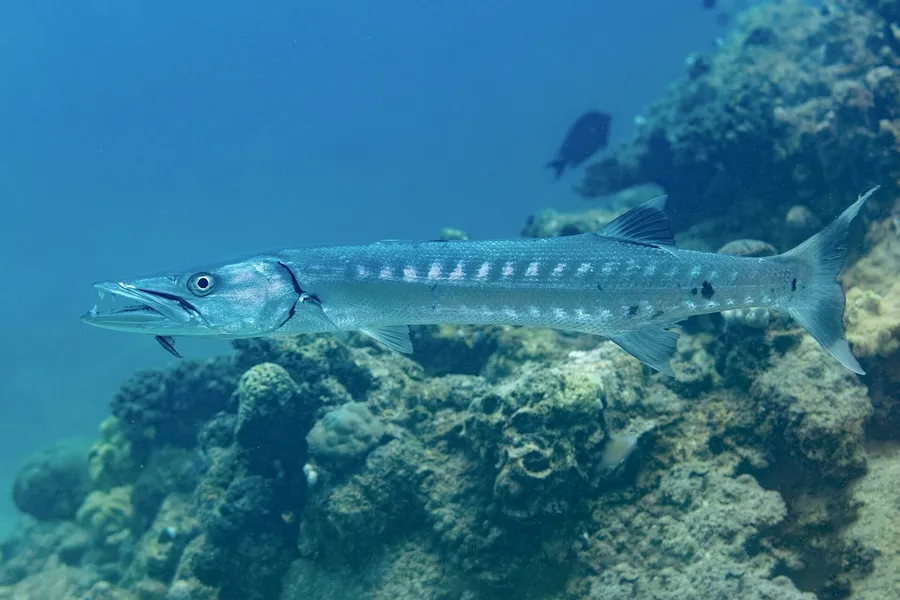
Photo: Diego Delso, CC BY-SA 4.0 (opens in a new tab), resized and cropped, via Wikimedia Commons (opens in a new tab)
Ciguatera risk — do not eat
Great barracuda
Sphyraena barracuda
A long, pike-like fish with a jutting lower jaw and fang-like teeth, blue-grey above and silvery white below. It lives around reefs, mangroves and seagrass beds in tropical and warm seas. Adults are usually 60 to 100 cm (24 to 39 in) and can exceed 1.5 m (4.9 ft).
Ciguatera: Associated with ciguatera — avoid eating. The CDC (opens in a new tab) lists barracuda among the fish that typically carry the toxin. Always return it to the water.
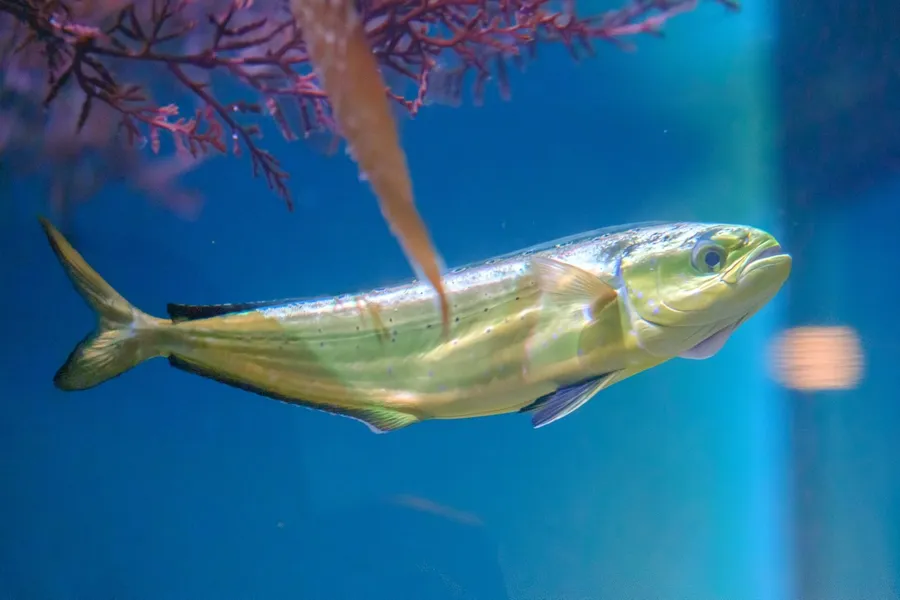
Photo: gendereuphorbia, CC0 (opens in a new tab), resized and cropped, via Wikimedia Commons (opens in a new tab)
Caution — ciguatera reported
Mahi-mahi (dolphinfish)
Coryphaena hippurus
A golden fish with bright blue and green on its back and one long dorsal fin; mature males have a steep, blunt forehead. It lives in warm offshore waters worldwide, near the surface. Catches are typically 7 to 13 kg (15 to 29 lb) and about a metre (3 ft) long.
Ciguatera: Wikipedia describes mahi-mahi as a common vector for ciguatera. The CDC (opens in a new tab) does not list it among the typical ciguatera fish. If in doubt, release it.
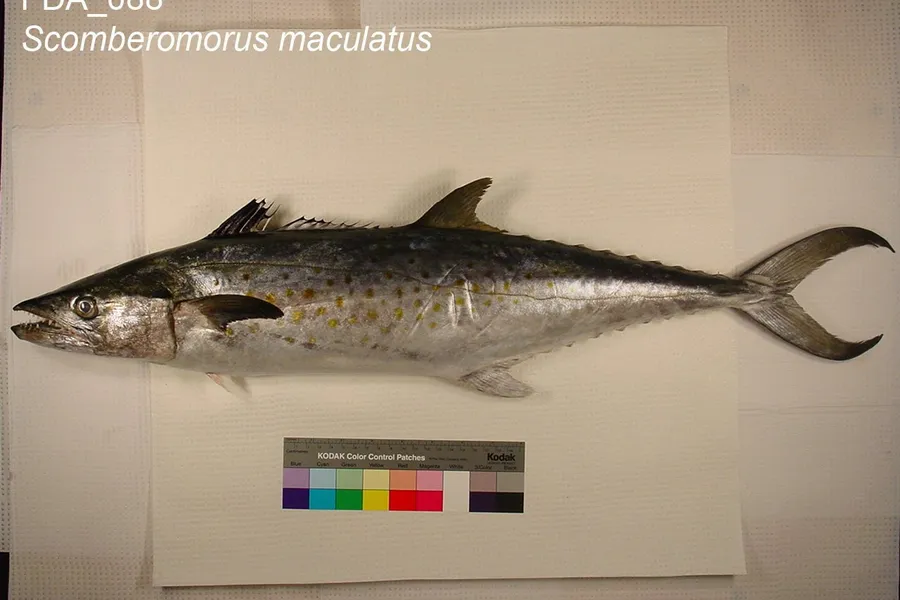
Photo: J. Deeds, Public domain, resized and cropped, via Wikimedia Commons (opens in a new tab)
Catch and release recommended
Atlantic Spanish mackerel
Scomberomorus maculatus
A green-backed, silvery fish marked with rows of round yellow spots and a black-fronted first dorsal fin. It is a migratory, shallow-water species of the western Atlantic. It rarely passes 94 cm (37 in) or 6.4 kg (14 lb).
Ciguatera: Not among the fish the CDC (opens in a new tab) lists as typical ciguatera carriers. It is not on our safe-to-eat list above, so release it unless you are sure.
Why the badge: Source: our advice above (catch-and-release in general; only tuna, mahi-mahi, kingfish and Wahoo are named as safe to eat).
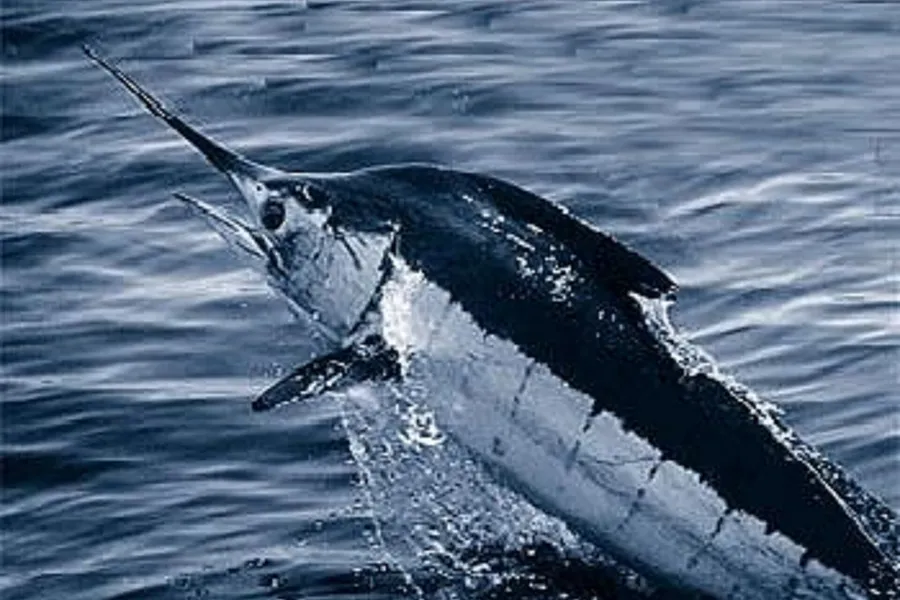
Photo: NOAA, Public domain, resized and cropped, via Wikimedia Commons (opens in a new tab)
Must be released
Blue marlin
Makaira nigricans
A large billfish with a long spear-like bill that lives in the open tropical and subtropical Atlantic, far from land. Females grow far larger than males, which rarely exceed 160 kg (350 lb). It is a prized game fish.
Ciguatera: Not among the fish the CDC (opens in a new tab) lists as typical ciguatera carriers. Billfish may not be kept in the BVI, so release it.
Why the badge: Possessing billfish such as blue and white marlin is illegal in the BVI (BVI Tourist Board: fishing permits (opens in a new tab)), as in the permit rules above.
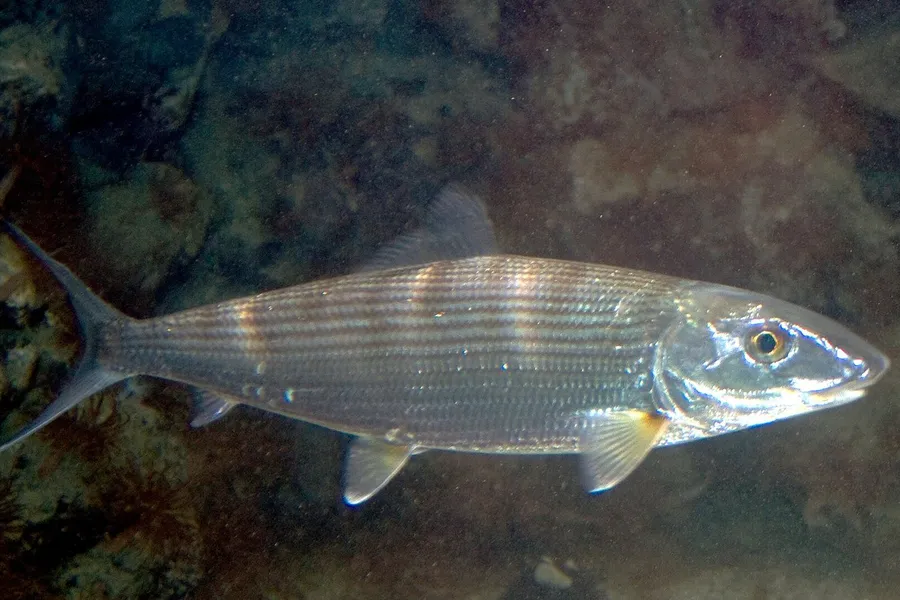
Photo: Brian Gratwicke, CC BY 2.0 (opens in a new tab), resized and cropped, via Wikimedia Commons (opens in a new tab)
Catch and release recommended
Bonefish
Albula vulpes
A slender, silvery fish, olive on the back, that feeds on shallow sand and mud flats on the incoming tide. It lives in the warm western Atlantic, including the West Indies, and grows to about 79 cm (31 in) and 7.7 kg (17 lb). It is a premier fly and light-tackle sport fish, usually released.
Ciguatera: Not among the fish the CDC (opens in a new tab) lists as typical ciguatera carriers.
Why the badge: Sources: our advice above and Wikipedia (opens in a new tab) (bonefishing is mostly for sport, so the fish are released).
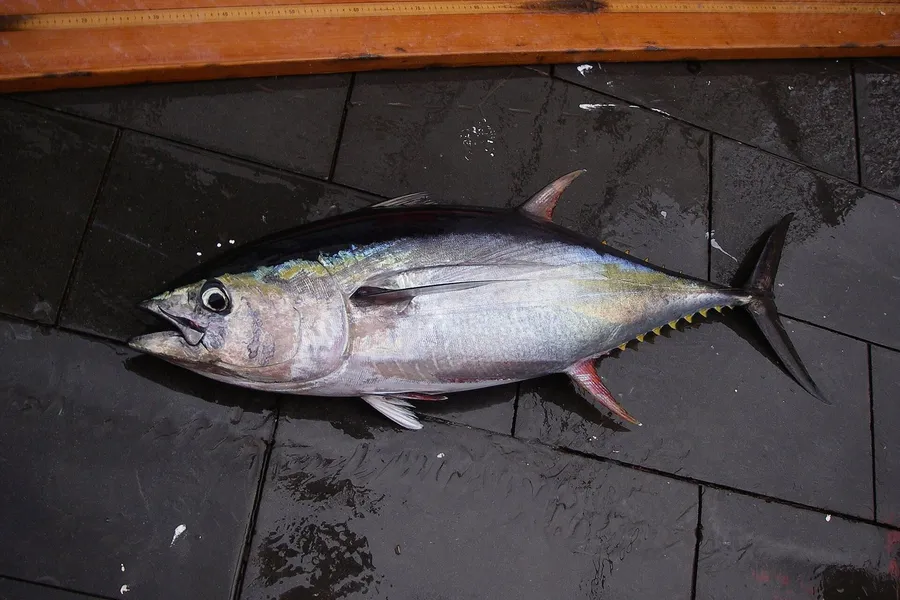
Photo: SEFSC Pascagoula Laboratory, NOAA/NMFS/SEFSC, Public domain, resized and cropped, via Wikimedia Commons (opens in a new tab)
Good to eat
Yellowfin tuna
Thunnus albacares
A sleek tuna with a dark metallic-blue back, a silver belly and bright yellow second dorsal and anal fins. It lives in the open waters of tropical and subtropical seas, mostly in the top 100 m, and comes closer to shore around islands. It can grow beyond 180 kg (400 lb).
Ciguatera: Not among the fish the CDC (opens in a new tab) lists as typical ciguatera carriers.
Why the badge: Sources: our advice above (names it as safe to eat) and Wikipedia (opens in a new tab) (often sold as ahi, a food fish). We found no source linking it to ciguatera.
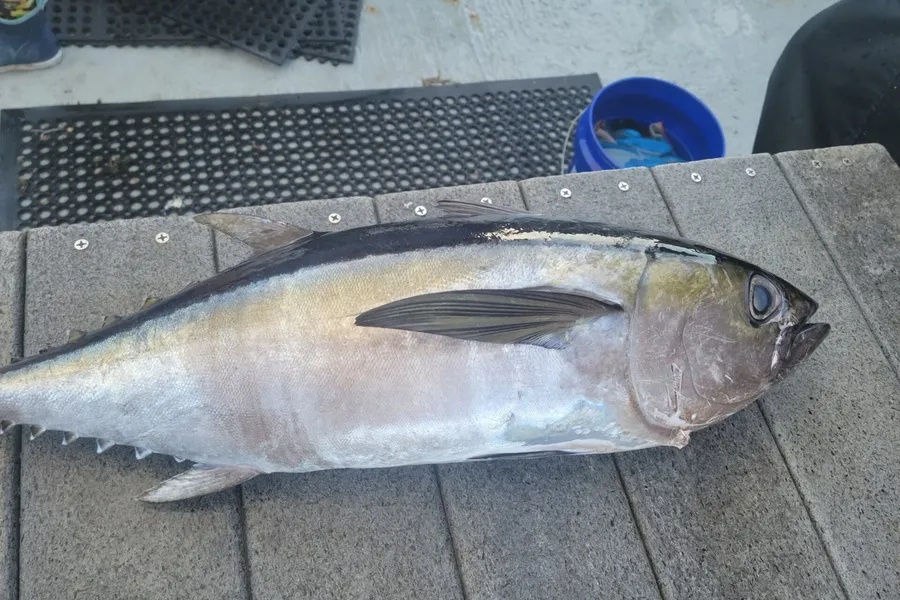
Photo: Ryan Watson, CC BY 4.0 (opens in a new tab), resized and cropped, via Wikimedia Commons (opens in a new tab)
Good to eat
Blackfin tuna
Thunnus atlanticus
The smallest of the true tunas, with a dark blue to black back, silvery sides and brownish finlets. It is found in the warm western Atlantic from Massachusetts to Brazil, including the Caribbean. It grows to about 1 m (39 in) and 21 kg (46 lb) at most.
Ciguatera: Not among the fish the CDC (opens in a new tab) lists as typical ciguatera carriers.
Why the badge: Sources: our advice above (names it as safe to eat) and Wikipedia (opens in a new tab) (a sport fish whose taste is comparable to other tunas). We found no source linking it to ciguatera.
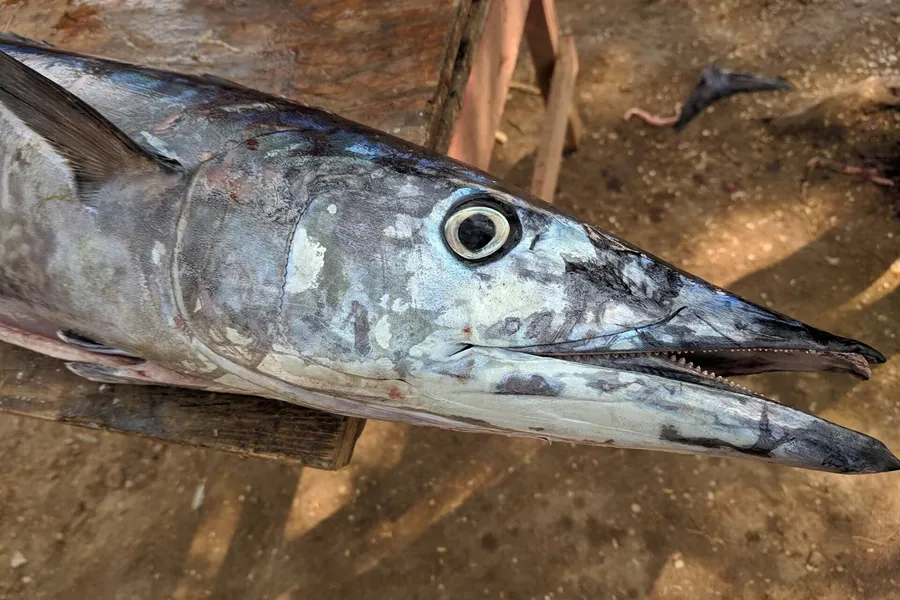
Photo: Zoltán Stekkelpak, CC0 (opens in a new tab), resized and cropped, via Wikimedia Commons (opens in a new tab)
Good to eat
Wahoo
Acanthocybium solandri
A long, slender fish with an iridescent blue back, silvery sides with blue bars, and razor-sharp teeth. It is found in tropical and subtropical seas around the world and is prized by anglers for its speed. Fish up to 2.77 m (9 ft) and 83 kg (183 lb) have been recorded.
Ciguatera: Not among the fish the CDC (opens in a new tab) lists as typical ciguatera carriers.
Why the badge: Sources: our advice above (names it as safe to eat) and Wikipedia (opens in a new tab) (a premium-priced commercial food fish). We found no source linking it to ciguatera.
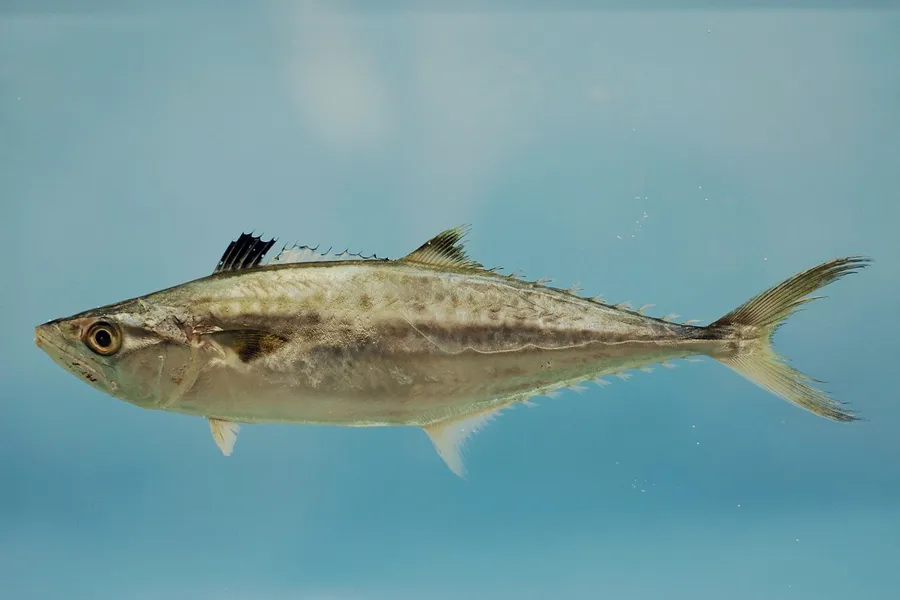
Photo: NOAA's Fisheries Collection, SEFSC Pascagoula Laboratory, Public domain, resized and cropped, via Wikimedia Commons (opens in a new tab)
Good to eat
King mackerel (kingfish)
Scomberomorus cavalla
An olive-backed fish fading to silver sides with a rosy sheen, a lateral line that dips sharply mid-body, and sharp, flattened teeth. It migrates through the western Atlantic and Gulf of Mexico, commonly in 12 to 45 m (40 to 150 ft) of water. Most are 5 to 14 kg (11 to 30 lb).
Ciguatera: Not among the fish the CDC (opens in a new tab) lists as typical ciguatera carriers.
Why the badge: Sources: our advice above (names it as safe to eat) and Wikipedia (opens in a new tab) (an important commercial and recreational catch). We found no source linking it to ciguatera.
Learn more about ciguatera from the CDC Yellow Book (food poisoning from marine toxins) (opens in a new tab) and Wikipedia (opens in a new tab). Release rules: BVI Tourist Board, fishing permits (opens in a new tab). Fish facts on this page are summarised from their Wikipedia pages. If you are ever unsure about a fish, release it.
Fishing gear for your charter
Rods, reels and tackle can be added to your charter as optional extras.